


Updated: Jan 6
Y-Combinator is still one of the most recognized startup accelerators in the world. Its alumni include Airbnb, Stripe, and Dropbox. Its model has inspired thousands of founders and dozens of similar programs.
But in 2026, Y-Combinator is not the right fit for every startup.
Some founders need more technical help during early development. Others want hands-on guidance with product, brand, or go-to-market. Many are building in industries that YC does not prioritize, or in regions where other accelerators offer stronger local support.
As a result, more early-stage teams are turning to new types of programs.
Some work with venture studios that help them build from zero, using in-house design, engineering, and growth teams. Others choose global accelerator networks that provide strong investor access and international reach. A few join talent-first platforms designed to help them find the right co-founder before they even start building.
We reviewed dozens of active accelerator programs and selected ten of the strongest Y-Combinator Alternatives in 2025. Each one represents a different approach, depending on your stage, sector, and startup goals.
Quick Comparison Table: Startup Accelerators like Y-Combinator
| Name | Region | Stage Fit | Equity Model | Focus Areas |
|---|---|---|---|---|
| Ellenox | USA, Europe, India | Idea to pre-seed | Custom / Studio | B2B SaaS, AI, and consumer apps |
| Techstars | Global | Pre-seed to seed | ~6% | General |
| Antler | Global | Solo to pre-seed | ~10% | General |
| Entrepreneur First | Global | Solo founders | ~10% | Deep tech, AI |
| Pear VC | US | Pre-seed | ~14% SAFE | Consumer, fintech |
| Forum Ventures | US | SaaS, early rev | ~7% | B2B SaaS |
| Berkeley SkyDeck | US | Deep tech | SAFE ($105K for 5%) | Biotech, AI, cleantech |
| Shinhan InnoBoost | Asia | Seed to growth | Flexible | Fintech, health tech |
| MiraclePlus | China | Early | ~7% | AI, consumer tech |
| Plug and Play | Global | Seed | Equity optional | Mobility, fintech, retail |
The 10 Best Y Combinator Alternatives
1. Ellenox Venture Studio
Best for: MVP execution, AI support, and pre-seed GTM readiness
Ellenox is a venture studio that partners directly with early-stage teams and technical founders to take ideas to market. Instead of offering demo days and slide reviews, Ellenox embeds engineering, AI, design, and go-to-market talent into your product team. Weekly sprints cover frontend, backend, LLM development, brand narrative, and fundraising prep. Ellenox is ideal for startups building in AI, fintech, or B2B SaaS who want to launch with velocity.
Website: ellenox.com
Portfolio: 50+ startups (Vinita, Grouped, Clockout)
HQ Location: Bangalore, India (USA, Europe, India Presence)
Company Types: AI Services, consumer, social, and B2B SaaS
2. Techstars
Best for: Founders seeking global mentorship and follow-on capital
Techstars runs over 40 accelerator programs across global cities. Its model focuses on deep mentorship, operational coaching, and access to a global network of investors and founders. Startups benefit from structured programming and exposure to VCs during and after the program. Techstars is best suited for founders preparing for institutional seed rounds and needing strong advisory support.
Website: techstars.com
Program Lead: Maëlle Gavet
HQ Location: Boulder, CO (Global presence)
Company Types: All sectors, industry-specific programs
Portfolio: 3,000+ startups
Top Alumni: SendGrid (IPO), DigitalOcean (IPO), ClassPass (Acquired)
Alumni Exits: 200+ exits, 15+ unicorns
3. Antler
Best for: Solo founders without a team or product
Antler helps individuals become founders. The program begins with team formation and idea validation, followed by funding and product development support. If you are a solo founder with ambition but no co-founder or clear direction, Antlers provides a structured way to build from scratch. It operates in cities like Singapore, New York, London, and Bangalore.
Website: antler.co
Program Lead: Magnus Grimeland
HQ Location: Singapore (Global presence)
Company Types: All sectors
Portfolio: 800+ startups
Top Alumni: Carousell (Series C), Bjak (Series A), Spenmo (Series A)
Alumni Exits: 50+ exits, 2 unicorns
4. Entrepreneur First (EF)
Best for: Technical or commercial individuals looking to meet co-founders
EF is a founder-first program that recruits individuals with technical or commercial backgrounds and helps them form startups. The program focuses on deep tech, AI, and high-barrier enterprise solutions. EF supports ideation, team formation, early validation, and fundraising in a structured environment. It is best suited for talent-driven founders without a team or product yet.
Website: joinef.com
Program Lead: Matt Clifford
HQ Location: London, UK (Global presence)
Company Types: Deep tech, AI, enterprise software
Portfolio: 300+ startups
Top Alumni: Magic Pony (acquired by Twitter), Tractable (Series C), Ramp (Series B)
Alumni Exits: 30+ exits, 1 unicorn
5. Pear VC
Best for: Early product teams in consumer or fintech with technical depth
Pear is a venture fund with a strong pre-seed accelerator arm. It helps technical teams with product validation, GTM strategy, and seed fundraising. Pear has deep ties to Stanford and Caltech founder ecosystems and is known for backing successful startups before traction. If you are building in consumer tech or fintech and need early guidance, Pear is a strong fit.
Website: pear.vc
Program Lead: Pejman Nozad
HQ Location: Menlo Park, CA
Company Types: Enterprise software, consumer tech, fintech
Portfolio: 200+ startups
Top Alumni: DoorDash (IPO), Guardant Health (IPO), Branch (Series C)
Alumni Exits: 40+ exits, 5 unicorns
6. Forum Ventures
Best for: Founders building early-stage B2B SaaS
Forum Ventures focuses exclusively on B2B SaaS. The program offers help with customer discovery, outbound strategy, pricing, and early revenue generation. The forum is designed for first-time SaaS founders aiming to build predictable sales and raise follow-on funding. It is especially useful if you are launching in North America and targeting enterprise buyers.
Website: forumvc.com
Program Lead: Eva Zlotnicka
HQ Location: Remote (US-based)
Company Types: B2B SaaS
Portfolio: 100+ startups
Top Alumni: Outreach (IPO), Mindtickle (Series C), Gong (Acquired)
Alumni Exits: 15+ exits, 2 unicorns
7. Berkeley SkyDeck
Best for: Research-based startups in deep tech or biotech
SkyDeck, run by UC Berkeley, merges academic depth with Silicon Valley investor access. It is tailored for founders with IP-driven businesses in AI, biotech, or deep tech. Teams benefit from lab access, regulatory coaching, and technical mentorship. SkyDeck is best suited for academic founders, university spinouts, or research-based ventures seeking seed funding and product-market clarity.
Website: skydeck.berkeley.edu
Program Lead: Caroline Winnett
HQ Location: Berkeley, CA
Company Types: Deep tech, AI, biotech, cleantech
Portfolio: 400+ startups
Top Alumni: Sight Machine (Series B), Gradescope (acquired), Capella Space (Series B)
Alumni Exits: 25+ exits, 1 unicorn
8. Shinhan InnoBoost
Best for: Startups in fintech and health tech entering Asian markets
InnoBoost is an innovation accelerator operated by Shinhan Futures Lab, part of South Korea’s Shinhan Financial Group. It helps startups access regulated industries in Asia, particularly in finance and healthcare. Founders receive enterprise partnerships, market access support, and local mentoring. It is a good fit for teams expanding into Vietnam, Korea, or Southeast Asia with region-specific go-to-market challenges.
Website: futureslab.com.vn
Program Lead: David Kim
Company Types: Fintech, health tech, edtech, logistics
HQ Location: Ho Chi Minh City, Vietnam
Portfolio: 50+ startups
Top Alumni: VinID (Series A), Moca (Series A), Homebase (Seed)
Alumni Exits: 8+ exits, 0 unicorns
9. MiraclePlus
Best for: Founders in China or nearby markets building fast-growth tech
MiraclePlus is YC China’s successor, launched by former YC China head Lu Qi. It follows the YC-style model of fast validation, iterative product development, and founder-focused capital. Based in Beijing, MiraclePlus is geared toward consumer, AI, and enterprise startups scaling in Asia. It provides early funding, mentorship, and structured product feedback cycles.
Website: miracleplus.com
Program Lead: Lu Qi
HQ Location: Beijing, China
Company Types: AI, enterprise software, consumer tech
Portfolio: 600+ startups
Top Alumni: Kuaishou, Xiaohongshu, Mobvoi
Alumni Exits: 80+ exits, 8 unicorns
10. Plug and Play Tech Center
Best for: Startups targeting enterprise pilots and corporate sales
Plug and Play runs vertical-focused accelerators in partnership with Fortune 500 companies. Startups participate in sector-specific tracks in fintech, mobility, retail, and health tech. The program is optimized for startups that already have a product and want corporate pilot deals or strategic distribution. It is best for B2B companies that rely on enterprise partnerships to scale.
Website: plugandplaytechcenter.com
Program Lead: Saeed Amidi
HQ Location: Sunnyvale, CA (Global presence)
Company Types: Fintech, health tech, insurtech, energy
Portfolio: 1,000+ startups
Top Alumni: PayPal (IPO), Lending Club (IPO), Rappi (Series D)
Alumni Exits: 300+ exits, 20+ unicorns
What to Consider When Choosing a Y Combinator Alternative
****
****
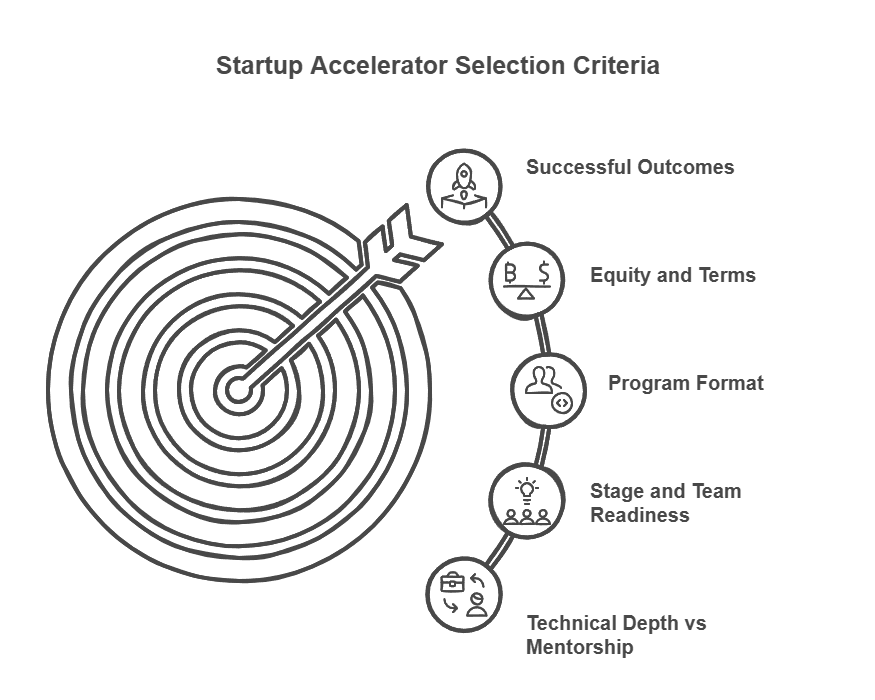
1. Program Format: Cohort or Embedded Partner
Accelerators like YC and Techstars run fixed cohort programs. Venture studios like Ellenox take a hands-on, embedded approach. If you need continuous product and engineering support rather than workshops and weekly check-ins, the partner model may be more aligned.
2. Stage and Team Readiness
Antler and Entrepreneur First are built for individuals at the ideation stage. Others, such as Pear VC and SkyDeck, expect teams with a product or technical prototype. Clarify whether your goal is to form a team, validate a product, or grow an existing one.
3. Technical Depth vs Business Mentorship
Some programs focus heavily on business advice, storytelling, and pitch readiness. Others prioritize execution, infrastructure, and development. If you are building something complex, such as an AI tool or enterprise workflow system, prioritize support that goes deep into the product.
4. Domain Specialization
Many accelerators are generalists. Some focus on sectors like B2B SaaS, deep tech, or fintech. Matching with a program that understands your buyer, compliance needs, or data architecture can speed up product-market fit and go-to-market execution.
5. Equity, Capital, and Terms
Accelerators often provide capital in exchange for equity. Venture studios may offer services, talent, or product support in place of upfront funding. Be clear on what you are trading and what kind of control or dilution comes with it.
6. Outcomes and Track Record
Look beyond the program pitch. Evaluate what startups achieve after graduation. Review alumni progress, follow-on funding, launch velocity, and real user growth. A successful outcome should include more than investor exposure. It should help you ship products and grow traction.
Why Choose Ellenox Instead of Traditional Accelerators
Most accelerators are designed around mentorship, pitch coaching, and demo day prep. Ellenox helps early-stage founders turn strong ideas into working software from day one
Rather than joining a cohort or waiting for a program to begin, founders at Ellenox work directly with senior engineers, AI developers, and product designers. The focus is on execution. Every week, teams ship real features, build infrastructure, and get support across product, design, and go-to-market.
If you are building automation tools, intelligent systems, or data-driven products, Ellenox helps you choose the right stack, design a scalable architecture, and build for your users.
For technical founders and early-stage teams who want to launch faster and smarter, Ellenox is a better alternative to traditional accelerator models.