


Pricing is one of the hardest and most misunderstood parts of building a SaaS company. Founders spend months perfecting features and design, yet many spend less than a day defining their pricing strategy. The result is predictable: underpriced products, long sales cycles, and revenue ceilings that appear far too soon.
Pricing is not a one-time decision. It is a living system that reflects how well you understand your customers, how clearly you communicate value, and how confidently you position your brand in the market. In SaaS, where recurring revenue compounds over time, even a small pricing mistake can snowball into a major business problem.
This guide breaks down how to price your SaaS product with precision.
Step 1: Start with a Clear Pricing Philosophy
Every pricing strategy begins with one core question: What are you really selling?
You are not selling code, features, or dashboards. You are selling value. That value might come from time saved, costs reduced, risk avoided, or revenue increased.
Founders who grasp this principle tend to use value-based pricing, where price aligns directly with customer outcomes. If your product saves a company one hundred thousand dollars a year, charging ten thousand dollars is completely fair. Many founders call this the ten-times rule: deliver ten times the value of your price.
On Indie Hackers, one founder summarized it simply:
I stopped guessing numbers. I started charging based on what I actually save customers. They stopped negotiating and started paying.
That is the essence of good pricing. The stronger your understanding of customer value, the easier it is to defend your price and communicate why it is worth it.
Step 2: Understand the Three Core Pricing Methodologies
There are three main ways to define your SaaS price: value-based, cost-based, and competitor-based pricing. Each has its place, but only one should guide your long-term strategy.
Value-Based Pricing
Value-based pricing begins with the customer’s perspective. It measures what results the product delivers and what those results are worth. It is the most effective and scalable approach because it links your success to your users’ success.
The challenge is effort. You must run interviews, gather data, and quantify how much impact your software creates. Few startups do this early, but those that do enjoy higher margins and stronger retention.
Cost-Based Pricing
Cost-based pricing adds a profit margin on top of production, support, and infrastructure costs. It guarantees you will not lose money, but ignores what customers are willing to pay. Costs should define your minimum price, not your final price.
Competitor-Based Pricing
Competitor-based pricing compares your price to similar products. It works when entering an existing market with clear anchors. However, copying others can easily trap you at a low price point. Many Reddit founders reported they “left 30 to 40 percent of revenue on the table” because they mirrored others instead of focusing on their own value.
Step 3: Choose a Pricing Model That Fits Your Product
Once you know your methodology, you must decide how to structure payment. Your model defines how customers experience value and how your revenue scales.
Tiered Pricing
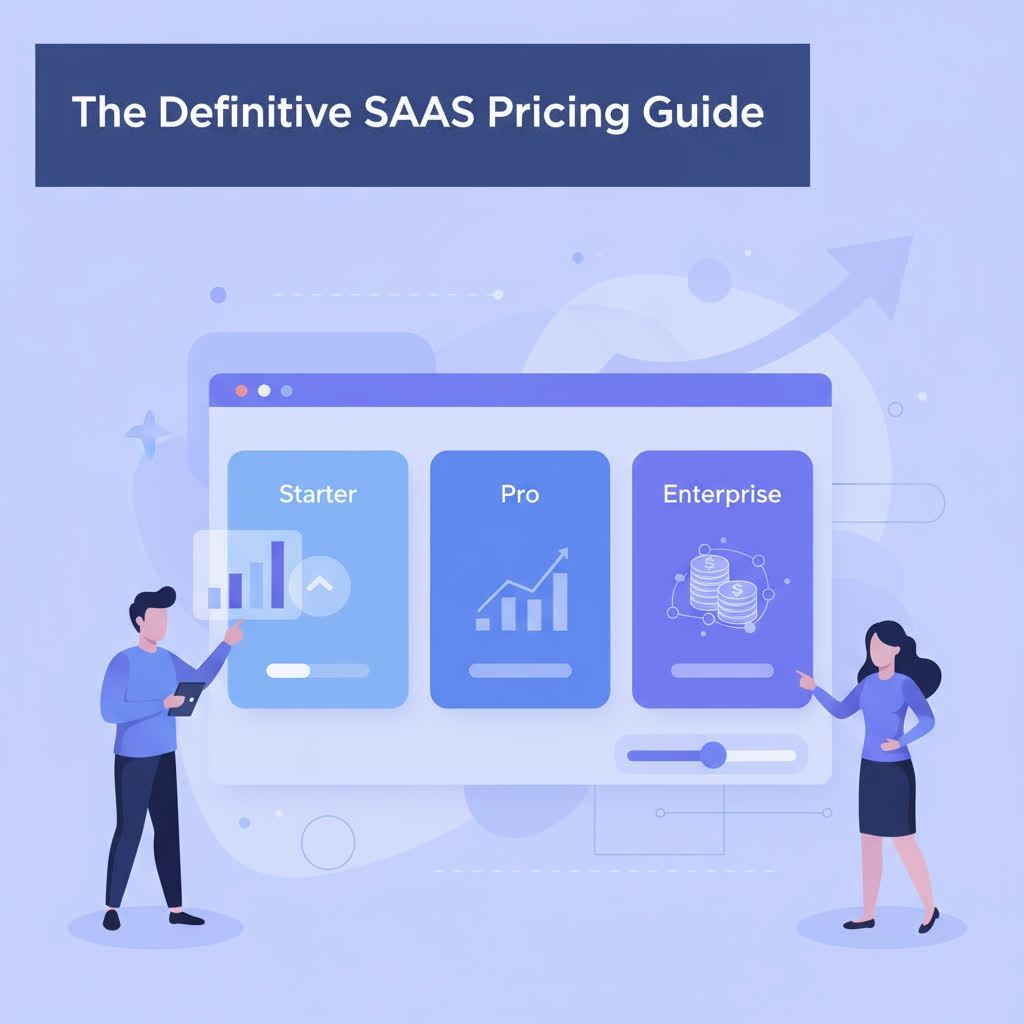
Tiered pricing is the most popular SaaS model. You create multiple plans for different segments, such as Starter, Pro, and Enterprise. This captures multiple willingness-to-pay levels and provides a clear upgrade path. Three to five tiers are ideal. Too few leaves money unclaimed, and too many cause confusion.
Community insight: Founders on Reddit often find that free trials convert better than free tiers. Free tiers convert under ten percent on average, while time-limited trials can reach twenty percent or more.
Usage-Based Pricing
Also known as pay-as-you-go, this model charges customers based on their consumption. It works well for API-based or data-heavy products such as Snowflake or Twilio. Customers like its fairness and flexibility because the cost rises only when usage grows.
The challenge is revenue predictability. If usage fluctuates, so will your income. Founders suggest building dashboards that show usage in real time to keep billing transparent.
Per-User Pricing
Per-user pricing charges a flat rate for each seat. It is simple and predictable, but it can discourage adoption when customers share accounts. This model works best for products where every user gets measurable individual value.
Flat-Rate Pricing
A single plan with a fixed price is easy to sell and explain. It suits focused products with limited feature variance. However, it limits upselling and revenue scaling. Use it in early validation stages, not for long-term growth.
Per-Feature Pricing
Customers pay based on functionality rather than users or usage. It allows flexibility but must be designed carefully to avoid confusion. Group related features and ensure that upgrade reasons are clear.
Freemium Model
The freemium model offers a free version with limited capabilities to attract users. It works if your free plan highlights core value and creates a strong incentive to upgrade.
Founders warn that it can become a trap if too generous, increasing costs while converting less than ten percent of users.
Step 4: Build the Structure of Your Pricing System
A complete SaaS pricing model includes six components. Together, they define how you charge and how customers experience payment.
Pricing Metric The measurable unit you charge for, such as users, API calls, or stores. It must be fair, easy to measure, and tightly tied to value.
Modality The payment structure. License models collect money upfront, providing cash stability. Usage-based models collect afterward, aligning payment with consumption.
Period The billing frequency. Monthly contracts are easier to sell but lead to higher churn. Annual plans reduce churn and strengthen cash flow.
Granularity The increment in billing. It can be atomic (per unit), chunky (per ten units), or expanding (scaling automatically with usage).
Discounts The incentive structure. Threshold discounts drop the price for all units after a volume level, while waterfall discounts apply only to incremental units. Choose based on customer motivation.
Price Point The actual number you charge. If every customer accepts instantly, you are underpriced. If about one quarter hesitate, you are near the right level.
Step 5: Pricing for B2B and Enterprise SaaS
B2B pricing must connect directly to business outcomes. Enterprise buyers think in terms of ROI. A practical rule is to capture about twenty-five to fifty percent of the total value delivered. If your software helps save one million dollars a year, a contract between two hundred fifty thousand and five hundred thousand dollars is fair.
Negotiation and Value Selling
Enterprise sales involve negotiation. Use the “gives and gets” method: if you offer a discount, ask for something in return, such as a multi-year commitment or a public testimonial. Always frame the discussion around value, not price. Co-create a business case with your customer and agree on success metrics before the pilot begins.
Anchoring also helps. Present the premium option first so that other packages appear more affordable. Reduce concessions gradually to signal that the negotiation is approaching its limit.
Paid Pilots
Never offer a free proof of concept. Paid pilots filter out non-serious buyers and set expectations for value. When discussing price early, frame it relative to outcomes. For example, say “Our clients usually pay around one-tenth of the value we deliver.”
Step 6: Pricing AI-Driven SaaS
Artificial intelligence changes how pricing works because AI systems often replace human labor directly, making value easier to measure. The right model depends on two factors: how measurable the results are (attribution) and how independent the system is (autonomy).
| Model Type | Attribution | Autonomy | Pricing Model |
|---|---|---|---|
| Co-pilot tools | Low | Low | Seat-based subscription |
| Hybrid tools | High | Low | Seat plus usage credits |
| Infrastructure AI | Low | High | Usage-based pricing |
| Autonomous systems | High | High | Outcome-based pricing |
Outcome-based pricing is the most powerful. It charges customers only for results achieved, such as successful transactions, savings, or resolutions. This allows companies to capture up to half of the value they create.
Step 7: Strengthen Your Value Proposition
No pricing strategy can fix a weak product or unclear market fit. Before refining your pricing, make sure your value proposition is strong.
The best problems to solve share four traits:
Unworkable: failing to solve it causes serious damage
Unavoidable: it is part of a necessary process.
Urgent: it needs attention right now.
Underserved: existing solutions are inadequate.
Build for a well-defined minimum viable segment and focus on problems that are “must-have,” not “nice-to-have.” The more critical your product, the stronger your pricing power.
Step 8: Use Psychology to Shape Perception
Pricing is not just math. It is psychology. Buyers make emotional judgments before rational ones.
Anchoring: Start with a high-priced option to make others look affordable.
Charm Pricing: Use prices ending in nine, such as 99 or 999, to create a lower perception.
Decoy Pricing: Add a less attractive plan to highlight your preferred one.
Center Stage Effect: Place your most profitable plan in the middle.
Choice Limitation: Offer three or four plans to avoid overwhelming buyers.
These techniques work best when paired with transparency and genuine value. They help customers feel confident, not tricked.
Step 9: Measure, Iterate, and Optimize
Pricing is never static. Track key metrics and adjust regularly.
LTV to CAC ratio: Aim for between three and five.
Churn rate: Keep it under two percent monthly for SMBs and around one percent for enterprise.
Expansion revenue: Measure upgrades and add-ons. A growing share of expansion MRR signals strong pricing health.
Bookings, Billings, and Revenue: Distinguish between signed deals, collected cash, and recognized revenue for accurate forecasting.
Change only one variable at a time when experimenting. Test pricing models carefully and measure both conversion and churn after each adjustment.
Ready to Price Your SaaS with Clarity?
At Ellenox, we help founders turn pricing into a growth engine. From value discovery to monetization strategy, we guide you through building a pricing system that scales with your product and your market.
If you are refining your model, preparing for launch, or optimizing revenue for investors, Ellenox can help you get there. Shape your pricing strategy with Ellenox Venture Studio.
Frequently Asked Questions About SaaS Pricing
1. Should I start with a free plan or a free trial? Start with a trial. Free trials convert better and attract more serious users. Free plans work only if the upgrade path is clear and compelling.
2. How often should I review my pricing? At least once every six months. Markets evolve, and your product’s value grows. Regular reviews prevent long-term underpricing.
3. Should I display prices publicly or require demos? Public pricing builds trust and shortens sales cycles for SMBs. For enterprise deals, flexible quotes allow customization.
4. How do I know if my pricing is too low? If most customers accept instantly, raise your price. About one quarter of buyers should hesitate or negotiate slightly.
5. How do I increase prices without backlash? Communicate improvements clearly, announce early, and offer existing customers legacy pricing or phased increases.