



People ask all the time how to start a startup. Now that technology is moving faster. AI has lowered the cost of building things. The barrier to entry is lower, but the competition is higher.
The truth is that starting a startup is both simpler and harder than it looks. Simpler because there are only a few things you really need to get right. Harder because those few things are very difficult.
Most guides will give you a list. Find an idea. Write a business plan. Raise money. Hire a team. That list is not wrong, but it misses the real point. What matters most in the beginning is not the plan. It is the people, the problem you are solving, and whether you can make something that grows.
This guide will give you the steps. But they are not steps in the sense of filling out forms or ticking boxes. They are things you need to understand if you want to survive.
1. Understand What a Startup Is
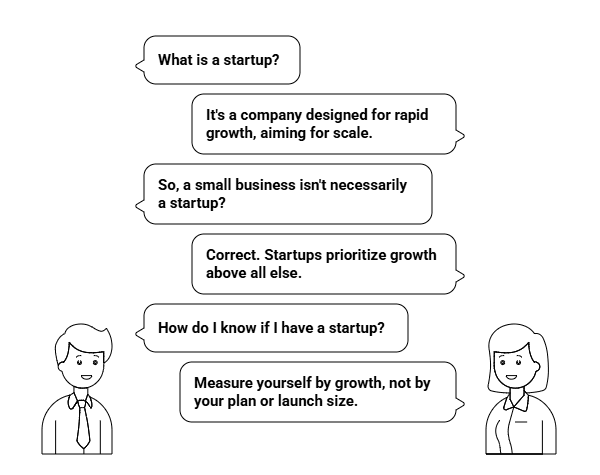
A startup is not just a small company. It is a company designed to grow fast. That is the defining feature.
Plenty of small businesses are profitable and important. But they are not startups. A startup aims at scale. If it cannot grow fast, it may still be a good company, but it is not what people mean when they say startup.
If you want a startup, you need to measure yourself by growth. Not by the elegance of your plan or the size of your launch. Whether you are growing.
2. Choose the Right Cofounders
The number one cause of startup failure is bad cofounder choices. Startups are stressful. They expose weaknesses.
You should only start with people you trust completely. It should be someone you would want to work with, even if the startup failed. Many people try to find cofounders the way you find employees. That rarely works. A startup is closer to a marriage than a job.
If you cannot find a cofounder you trust, it is better to wait. A bad cofounder is worse than no cofounder.
3. Learn Before You Start
The best way to prepare for a startup is not to study startups. It is to learn about the world.
When you follow your curiosity and work on projects, you see problems up close. Those problems often turn into startup ideas. Most good ideas come from noticing something firsthand.
Side projects are not a distraction. They are training. They are how you learn to build things and how you discover what matters to people.
4. Find a Real Problem
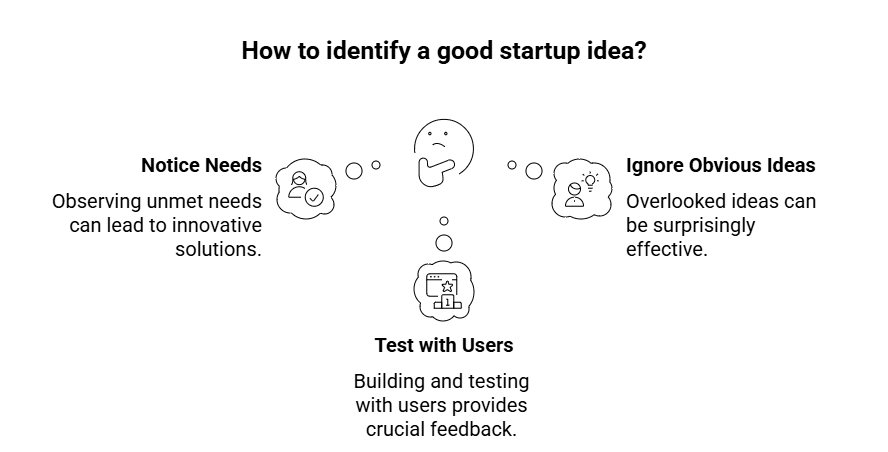
Good startup ideas are usually not found by sitting down and trying to think of them. They come from noticing what people need.
The best ideas often look unpromising at first. If they looked obviously good, big companies would already be doing them. The fact that they look unimportant is part of why they work.
The real test is not whether your idea sounds clever. It is whether users care. The only way to know is to build something and put it in their hands.
5. Launch Early
Most founders wait too long to launch. They want to polish the product. They think the first version must be perfect.
That is a mistake. The first version should be something small. It will not be perfect, but that is fine. The point of launching is not to impress people. The point is to start learning from users.
The faster you launch, the faster you learn. The longer you wait, the more you are just guessing.
6. Talk to Users
Talking to users sounds obvious. But most founders avoid it. They would rather write code or design features.
This is dangerous. The only way to know what to build is to ask people and watch how they use your product. Founders who ignore users end up building the wrong thing.
Users will not always tell you exactly what they want. But if you listen, you will hear what matters to them. That is the fastest way to improve.
7. Focus on Growth
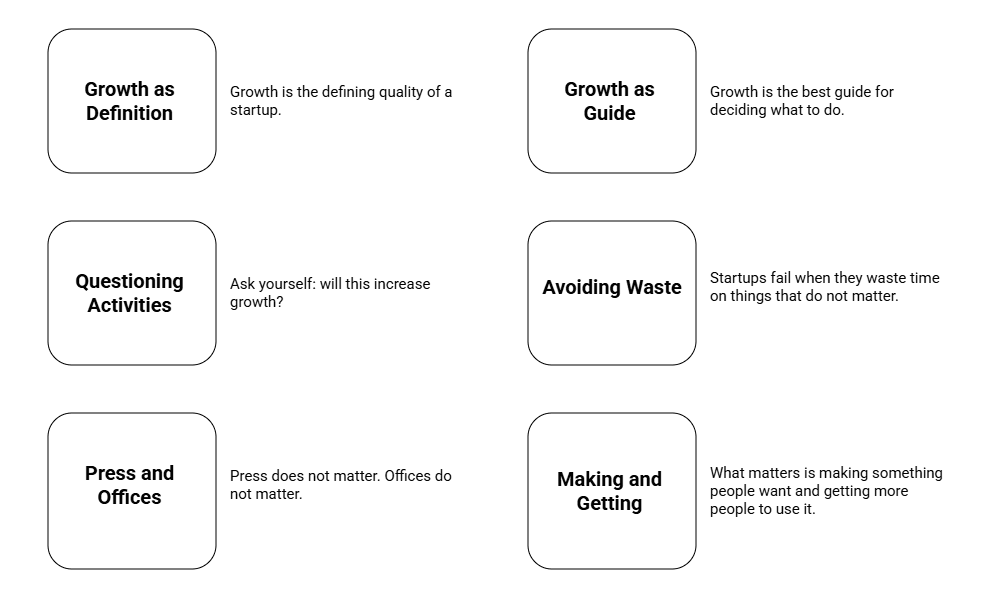
Growth is the defining quality of a startup. It is also the best guide for deciding what to do.
Ask yourself: Will this increase growth? If the answer is no, think hard about why you are doing it.
Startups fail when they waste time on things that do not matter. Press does not matter. Offices do not matter. What matters is making something people want and getting more people to use it.
8. Avoid Common Mistakes
The most common mistakes are always the same.
Choosing the wrong cofounders. Waiting too long to launch. Ignoring users. Underestimating how hard it will be.
Startups are brutal. They consume all your time and energy. You will feel like quitting. Many founders do. The ones who succeed are often just the ones who keep going.
9. Decide on Funding
Not every startup needs funding. But if you want to grow fast, it helps.
Investors care about growth. If you are growing fast, they will chase you. If you are not, nothing else will convince them.
Funding comes in stages. At first, it may be friends or angels. Later, it may be venture capital. Each round is a bet that your growth will continue.
Do not raise too early. You will give away too much. Do not raise too late. You may not survive. The best time to raise is when you have growth that proves you are onto something.
10. Start Now
You will never feel ready. No founder ever does.
The best preparation is to keep learning, to work on interesting projects, and to meet people you respect. Then, when you notice an opportunity, you will be ready to act.
The biggest risk is not that you will fail. The biggest risk is that you will never try.
Work With Ellenox Venture Studio

Work With Ellenox Venture Studio
Starting a startup is hard. Most founders fail not because the idea is bad, but because the early stage is chaotic. You are shaping the product, talking to users, raising money, and making decisions with little margin for error. This is the moment when the right support makes the biggest difference. Ellenox Venture Studio works with founders at this stage. We bring experience, resources, and a team that has built and scaled companies before. We help refine your idea, connect you with early users, and design a path to real growth. If you are ready to build, talk to us. We want to hear what you are working on.